
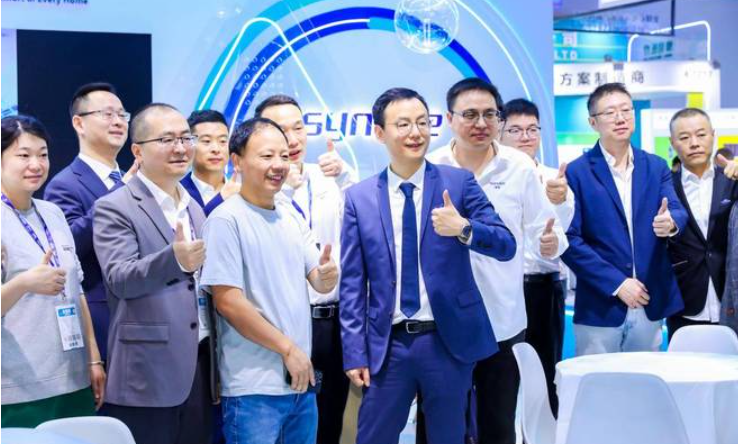
Synaire made its debut at the 93rd China International Medical Equipment Fair (CMEF), held April 9–12, 2026, introducing its SynAura series of home respiratory therapy devices. The exhibition appearance followed the company’s product launch on April 8.
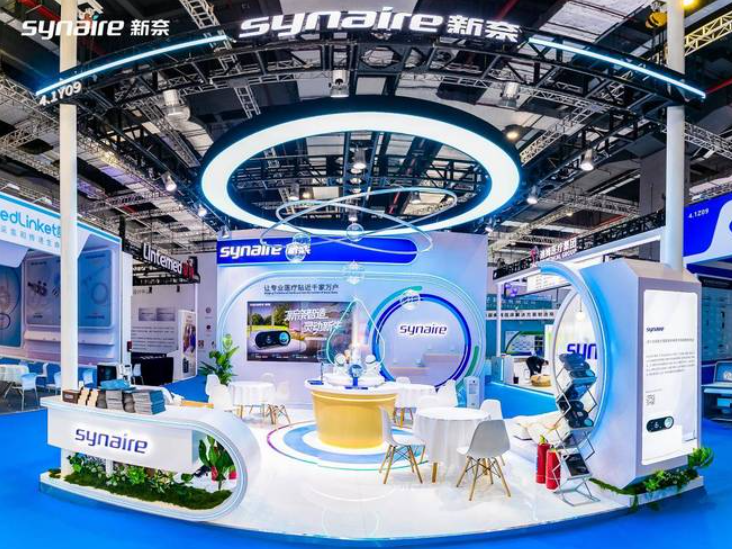
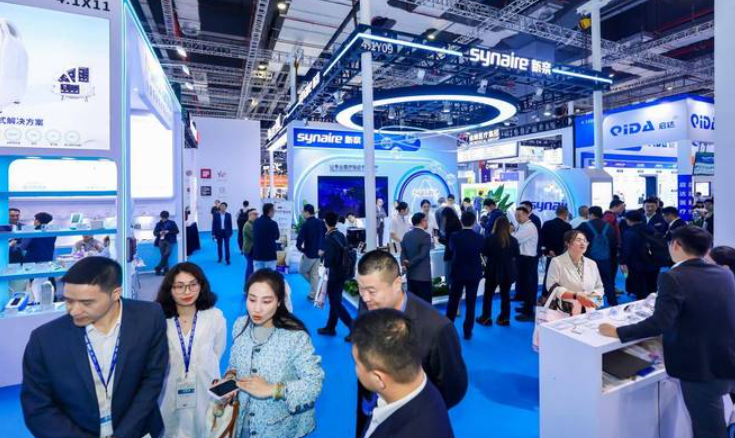
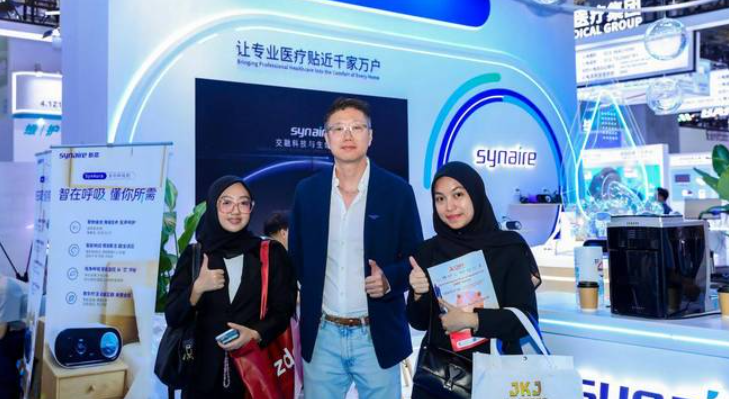
From the opening day, the range attracted interest from Chinese and international distributors, healthcare institutions, and industry visitors. Demonstrations highlighted its foam-free acoustic design, proprietary respiratory algorithms, distributed chip architecture, and adaptive humidification.
A Compact Range with Foam-Free Noise Control
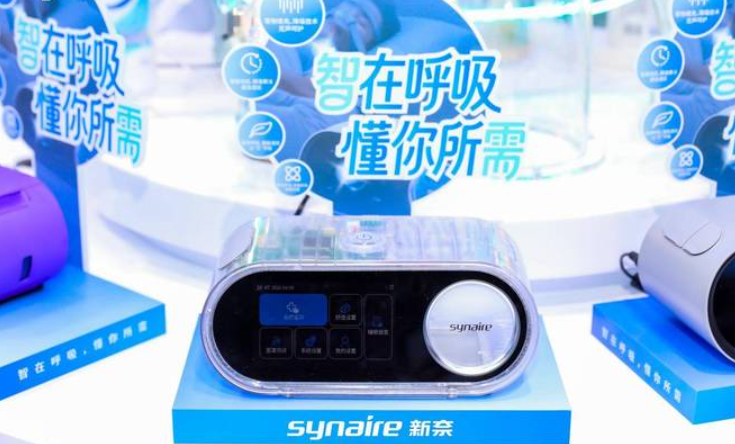
The SynAura range shown at CMEF included single-level and bilevel models, with therapy pressures ranging from 4 to 30 cmH₂O depending on the model. The series combines a compact structure with a blower system that does not use foam or silicone acoustic filling.
A high-quality blower, adaptive airflow noise control, and a multi-chamber acoustic design work together to reduce operating noise to as low as 25 dB. By avoiding acoustic filling materials in this system, the design removes those materials as a potential source of degradation particles.
The air inlet also incorporates a HEPA filtration module with a reported PM2.5 filtration efficiency of at least 99.97%, helping reduce particles entering the device.
Distributed Control and Adaptive Respiratory Algorithms
SynAura uses a distributed “2+2+2” chip architecture, with dedicated control for the main processing unit, high-precision pressure and flow sensing, and temperature and humidity sensing. The system supports millisecond-level responses, monitoring breathing waveforms and adjusting pressure as breathing needs change.
Its proprietary respiratory algorithms detect respiratory events. The Dynamic Snore Elimination (DSE) system uses two sensors to distinguish snoring-related signals from background noise. Model predictive control (MPC) anticipates transitions between inhalation and exhalation in single-level modes, while Auto S mode adapts the pressure profile to help reduce average therapy pressure.
Adaptive humidification can deliver up to 96% relative humidity under the specified operating conditions. Wi-Fi data uploads support remote follow-up and authorized adjustments to therapy settings, connecting device use with ongoing care.
R&D Collaboration Across Three Locations
Synaire also presented its research and development capabilities. Teams in Hefei, Shenzhen, and California work together across product development and engineering, drawing on the core team’s overseas education and experience at leading medical device companies.
At the time of the exhibition, the company was progressing work toward CE marking and U.S. FDA market authorization. Its development approach connects product engineering with safety testing and the generation of clinical evidence.
Making Respiratory Care More Practical at Home
China has a substantial population living with OSA and COPD, while many people remain undiagnosed or do not receive appropriate treatment. Demand is growing for home respiratory therapy devices that are responsive and easy to use. Advances in control algorithms and connectivity are creating new opportunities to tailor therapy and support follow-up.
Synaire’s approach combines proprietary algorithms, collaboration across its R&D locations, a compact foam-free design, and connected care capabilities. The aim is to make respiratory support more practical for everyday use and support ongoing care at home.