
On April 8, 2026, Synaire introduced its SynAura series of home respiratory therapy devices at a launch event in the Shanghai Grand Ballroom of the Cordis, Shanghai, Hongqiao hotel. The company announced that the series had obtained medical device registration in China and was being launched in the Chinese market.More than 100 guests from healthcare institutions, investment firms, distribution partners, and the media attended the event to learn about the new range.

From Product Development to Market Launch
At its first major brand and product launch, Synaire presented the results of its work in respiratory therapy development. The introduction of SynAura marked the transition from core technology development through medical device registration to commercial availability in China.
The range is designed to support respiratory care at home, including treatment for obstructive sleep apnea (OSA) and ventilatory support for appropriately selected patients with chronic obstructive pulmonary disease (COPD). Clinical suitability depends on the specific model, prescribed mode, and registered intended use.

Connecting Clinical Expertise with Care at Home
At the event, Synaire CEO Dr. Xi Qiu described the company’s aim to make respiratory care more connected and better suited to home use. The approach combines respiratory support, access to therapy data, and a product design intended to fit into everyday life.
SynAura adapts respiratory support technology for the home through three areas of safety engineering: system redundancy, adaptive algorithms, and material biocompatibility. These elements are designed to support reliable operation, respond to changes in breathing, and address material safety within the airflow system.
A Closer Look at SynAura’s Technology
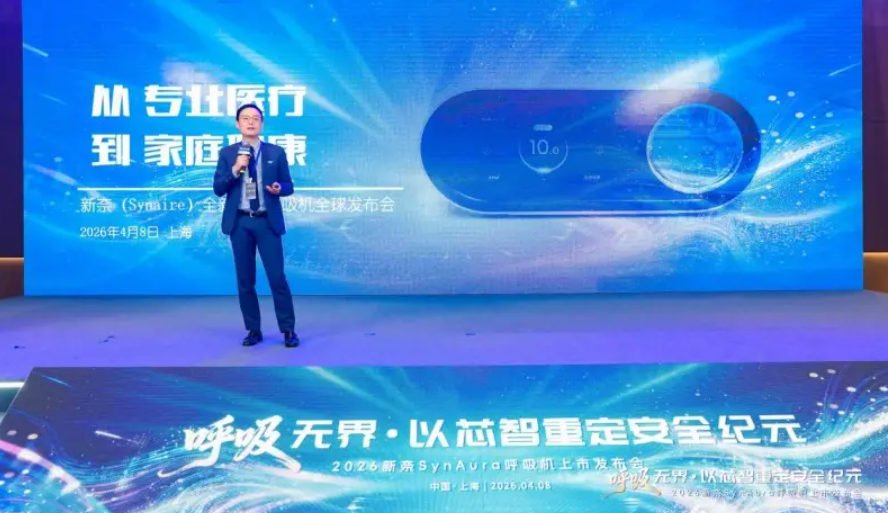
Dr. Chao Yong outlined the company’s in-house development work, including its foam-free acoustic design and model predictive control (MPC) algorithm. He described a system that responds to users’ breathing patterns and dynamically adjusts therapy pressure to support individual needs.
The algorithms are designed to identify respiratory events and respond rapidly to changes in breathing, helping improve coordination between the user and the device. SynAura’s compact form and minimalist appearance also received recognition through the Red Dot Award: Product Design 2026.

Distribution Strategy and Ongoing Support
Xiaodong Jiang, who leads Synaire’s sales strategy in China, outlined the company’s market priorities and partner program. The strategy focuses on existing users seeking replacement devices, newly diagnosed patients, and younger prospective users.
The program combines accessible entry requirements, growth incentives, marketing support, and service development. Its goal is to help partners move beyond a one-time device sale toward ongoing support for sleep and respiratory health.

Supporting Adherence to Long-Term Therapy
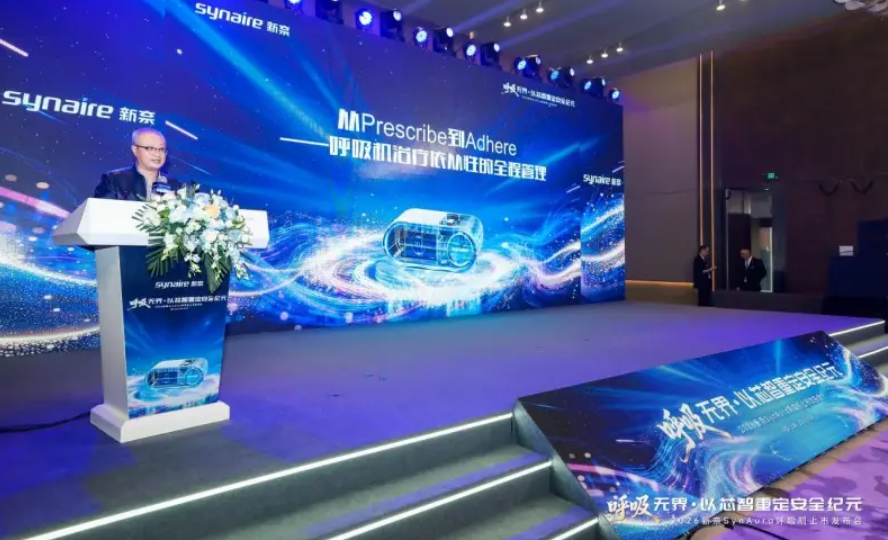
Professor Shanqun Li of the Department of Respiratory Medicine at Zhongshan Hospital, Fudan University, gave a lecture on treatment adherence. He emphasized the role of positive airway pressure (PAP) in treating adult OSA and the challenges of sustaining regular use. He cited long-term adherence rates of 50%–60% and 90-day rates of 45.6%–57%, noting that adherence can decline over time.
The lecture addressed factors including pressure tolerance, the timing of device responses, humidification, operating noise, patient education, and follow-up. Synaire presented its work on adaptive pressure control, noise reduction, and temperature and humidity management as ways to improve therapy comfort and support consistent use.
Building a Broader Foundation for Home Respiratory Care
Growing demand for respiratory care at home is creating a need for devices that combine reliable performance with practical everyday use. Synaire’s launch brought together its product development, distribution strategy, and plans for ongoing patient support.
For the company, the introduction of SynAura puts its mission of bringing professional healthcare closer to home into practice. Its focus on responsive control, safety engineering, and ease of use is intended to support people receiving sleep apnea therapy or prescribed noninvasive ventilation at home.